Process & Research
Great design doesn't start with a blank canvas. It starts with a question.
Who is this for, and what do they actually need? Across 15+ hospitality products serving hotel staff, restaurant servers, spa managers, and casino operators, every redesign was grounded in a structured, evidence-driven process. The depth flexes with budget and timeline. The framework never changes.
The UCD process cycle.
Every project moves through six stages — not once, but iteratively until the product earns the right to ship. Evaluation feeds back into strategy, and the loop turns again.
The complete UX life cycle.
Five disciplines working in sequence — each feeding the next, from executive intent to validated, shipped design. Select a discipline to look inside it.
Eight steps, applied with judgment.
The framework is fixed; the depth is tailored to what each client and project need most. The goal is never process for its own sake — it's the highest-impact output at every step.
Design Strategy
Understand executive intent, define target users, map general tasks, identify technology constraints, agree critical success factors. Output: a Design Strategy document that creates alignment before any design investment.
Design without testing is assumption.
Every product is validated through structured testing — tailored to context, timeline, and what we most need to learn. Every approach is a trade-off: flip each one to compare.
Moderated vs. Unmoderated
A facilitator guides tasks and captures real-time reasoning — deeper insight, more coordination.
Remote vs. In-Person
Reaches users across geographies in their own environment — vital for globally distributed hospitality software.
Formative vs. Summative
During development — catching issues early, where the most impactful decisions are made.
Guerrilla Testing
Fast, low-cost sessions in informal settings for rapid feedback on early prototypes.
A/B Testing
Two versions tested side by side to resolve design conflicts with data, not opinion.
Card Sorting
Reveals how users mentally model information — directly informing IA decisions.
Eye Tracking & Heatmaps
Objective visual engagement data via FullStory, detecting friction before it escalates.
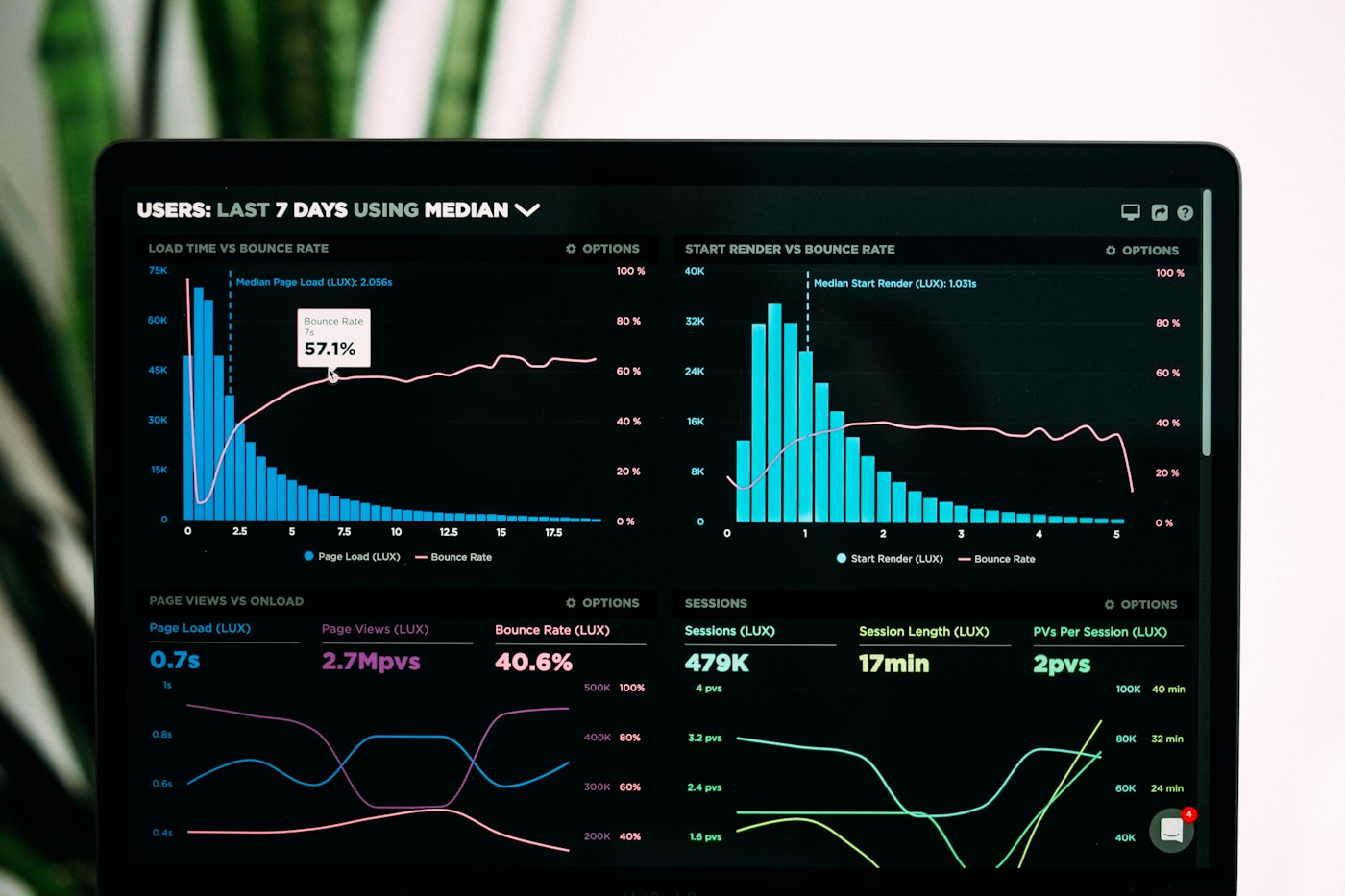
Analytics tell you there's a problem. FullStory shows you what it looks like.
When you're responsible for 15+ products used by thousands of hospitality staff worldwide, you can't sit beside every user. With FullStory deployed in live customer environments across Spa, Retail, Golf, VERSA, Reserve, and other PMS apps, you don't need to.
Tagless autocapture recorded every click, scroll, hesitation, and navigation path across thousands of live sessions. Our team spent hours and days going through them — studying navigation flows, click patterns, skipping patterns, and dwell time. Hesitation is friction, and friction is a design failure waiting to be fixed.
How users actually moved through the product — restructured menus around real paths, not the original architecture.
Entire sections users bypassed — flows that were unnecessary or positioned wrong, then removed or shortened.
Pages where users hesitated unusually long — because hesitation is friction, and friction is a design failure to fix.
"FullStory scales empathy. It makes invisible friction visible — and gives design teams the evidence to make bold structural changes with confidence, because the data says so, not just the designer. The changes delivered measurable commercial impact: improved customer retention across the affected products."
Accessibility is not a checkbox. It's a design quality standard.
My practice is grounded in formal training — the IDF Accessibility certification. I ran workshops across the org teaching designers, developers, BAs, and QA what accessibility means in practice, wrote and distributed a dos-and-don'ts guideline PDF, and presented the case to SVPs, the CTO, and the CEO. VPAT compliance is now a standard demand in enterprise RFPs — customers require it before they sign.
For every product, accessibility is built in from the first frame — checked with the Spark plugin and contrast tools, evaluated against WCAG A, AA, and AAA, and documented for developers. The most rigorous work was the third-party VPAT certification for IG Kiosk and IG OnDemand — automated scans with AccessiBe, JAWS, and WAVE, full manual evaluation of tab order, screen readers, and contrast, and iterative fixes until both met the standard.
I owned the entire vendor selection — researching, challenging methodology, and making the final call with full accountability for the credibility and commercial value of the VPAT that resulted.
"Accessibility is not about building for a minority. It's about building so well that everyone can use what you make."

Most people learned it secondhand. I learned it from the source.
I completed Design Thinking: From Insights to Viability — an executive programme from Stanford GSB, where Design Thinking as a formal discipline was created — led by Professor Stefanos Zenios. I applied the full process to a real challenge: "How might we enable managers to effectively delegate and manage tasks in remote work?"
Observe & Interview
Identified a busy software manager navigating remote-work chaos. The surface problem was delegation; the deeper one was a total lack of real-time visibility.
Saturate & Cluster
Spread findings across a workspace and clustered. Built an empathy map, journey map, and a task-flow showing twelve manual steps where there should have been one.
Point of View
Synthesised a composite character — Stephen Douglas — and a precise POV that reframed the problem into a sharp How Might We statement.
Ideate
A buddy team ran structured brainstorming — Analogous, Crazy, Constrained, Sabotage. The top idea: a unified real-time dashboard of tasks, status, and timelines.
Experiment
Defined what must be true for the model to succeed — concierge tests, landing pages, A/B comparisons — with a pivot framework when the model needs to change.
Business Model / Case Canvas
Mapped commercial viability — value proposition, segments, revenue, cost, partnerships. At Director level, this is what separates a designer from a design leader.
Test
Tested with managers facing real coordination challenges. Fast, honest feedback drove the build-test-learn-improve loop toward something genuinely useful.
Prototype
Paper sketches, then lo-fi wireframes — each built to answer a specific question, not to showcase design skill.

"Stanford taught me how to take any idea — no matter how raw — and convert it into a real, viable MVP. I went in as a design leader. I came out as a full-fledged design thinker. And in a field where everyone designs, that is the jewel in the hat."
Process you can put to work.
Want to see how this rigour translates into shipped products and real outcomes?